
Leave a Message
We will call you back soon!
Your message must be between 20-3,000 characters!
Please check your E-mail!
More information facilitates better communication.
Submitted successfully!
We will call you back soon!
Leave a Message
We will call you back soon!
Your message must be between 20-3,000 characters!
Please check your E-mail!
| Place of Origin: | CHINA |
|---|---|
| Brand Name: | OASIS |
| Certification: | GB/T 19001-2016/ISO9001:2015 |
| Model Number: | OASIS-2025-06-18 |
| Minimum Order Quantity: | 10 Meter/Meters |
| Price: | Negotiation |
| Packaging Details: | Wooden cases or pallet or bundle or container or according to clients' requirements |
| Delivery Time: | Within 35 days |
| Payment Terms: | L/C, T/T |
| Supply Ability: | 6000 Meter/Meters per Month |
| Port: | All China Port | Package: | Bubble Bag, Woven Bag, Wooden Box |
|---|---|---|---|
| Connection: | Thread, BTC, LTC, STC | Material: | 304,304L,316,316L |
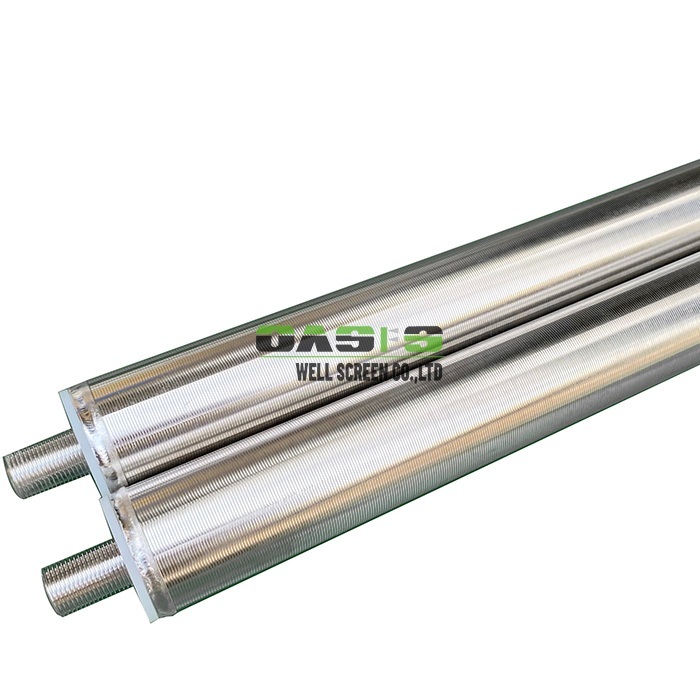
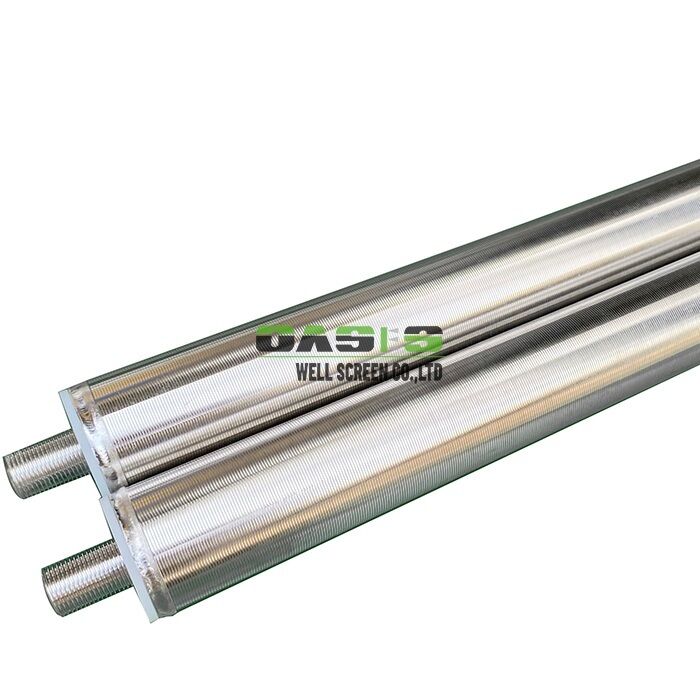
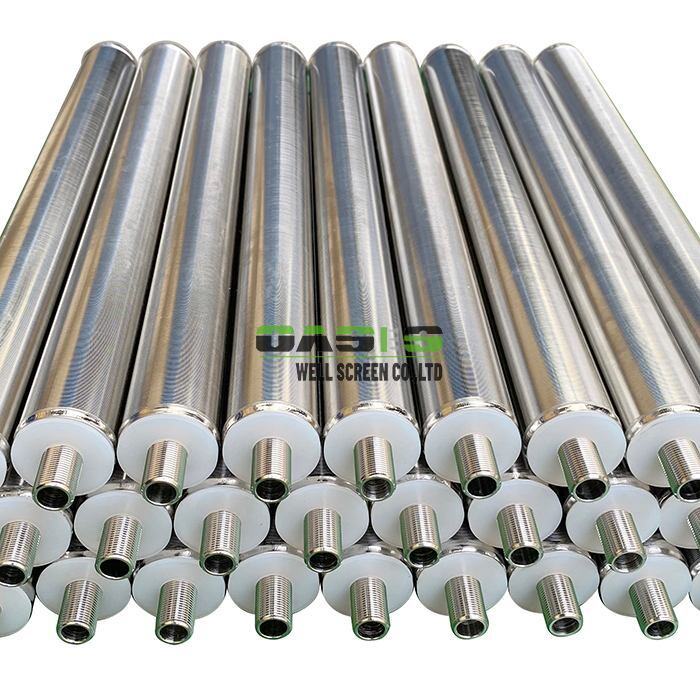
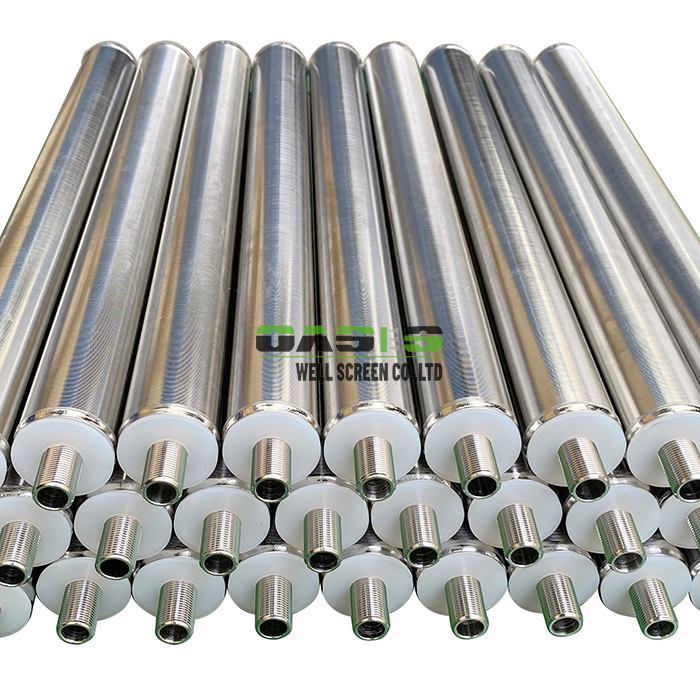
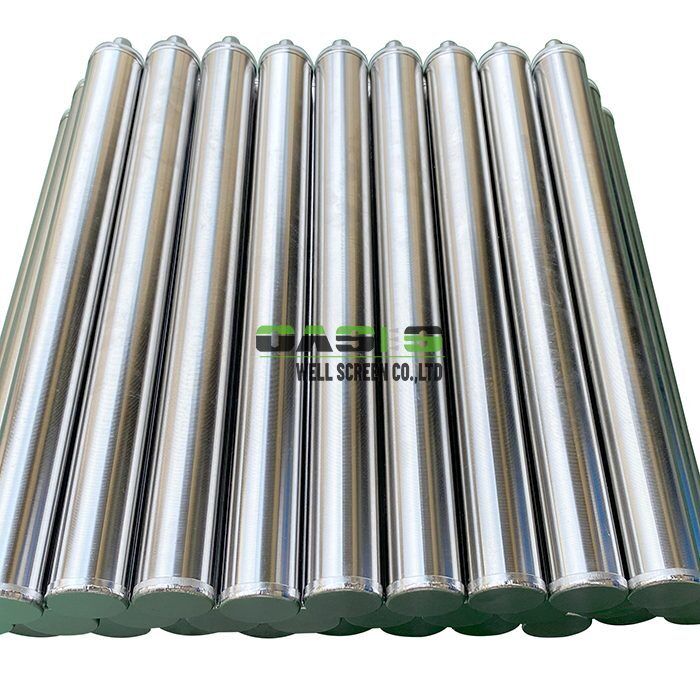
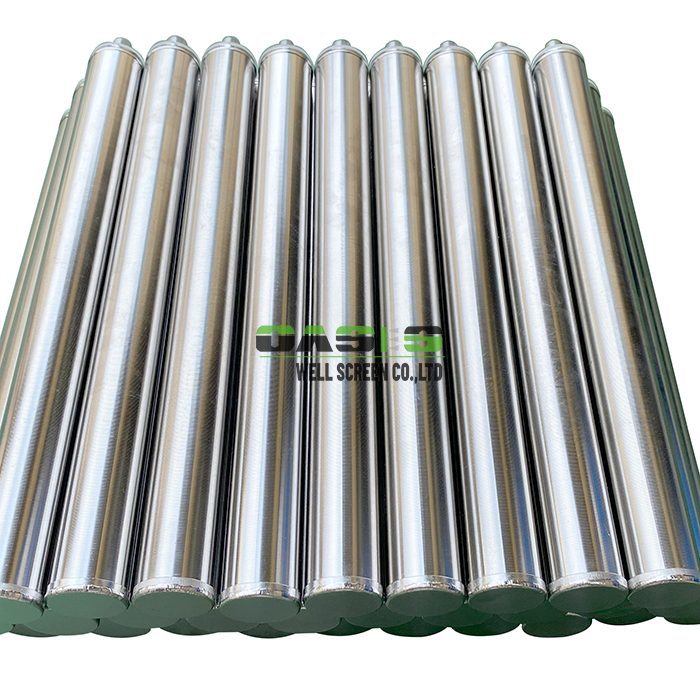
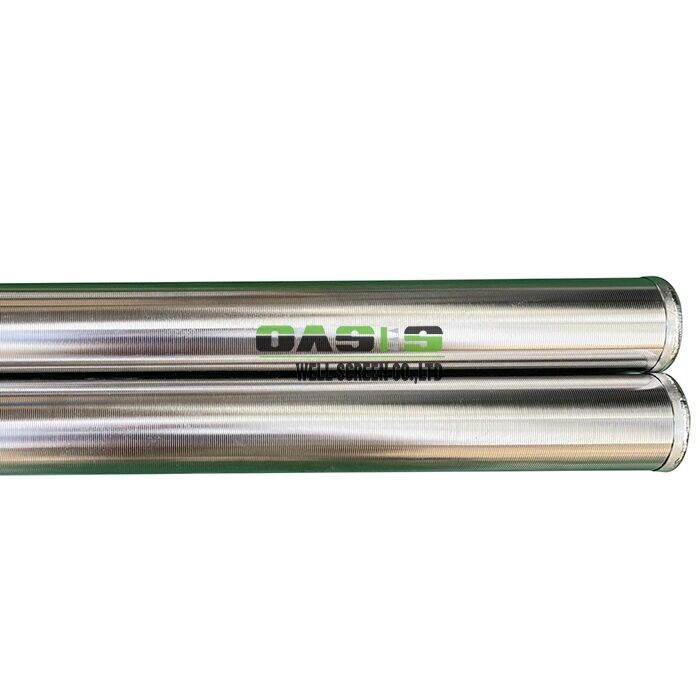
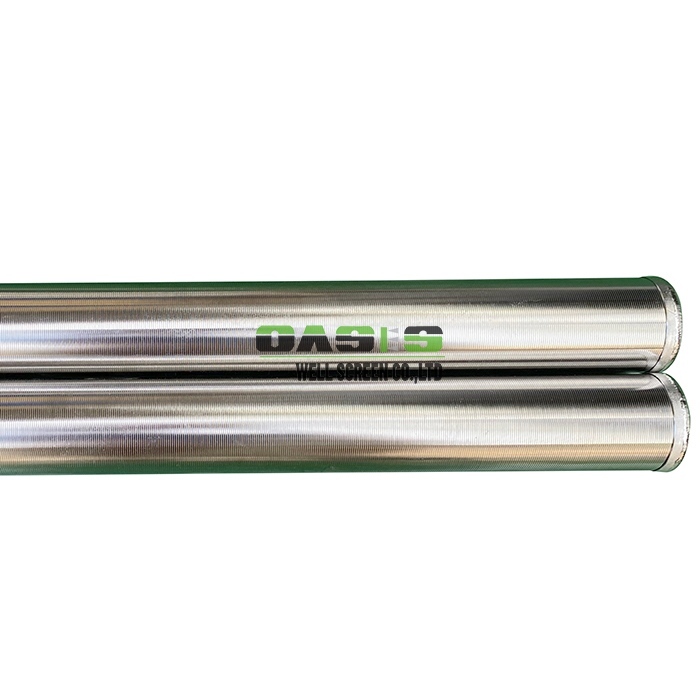
The Wedge Wire Screen Cylinder is a precision-engineered reverse-wound filter element, meticulously manufactured from 316L stainless steel to deliver exceptional filtration performance in demanding liquid-solid separation applications. Unlike standard forward-wound screens, this reverse-wound design features the V-shaped profile wire wound with the apex facing outward and the slot opening on the inner surface – creating a self-cleaning, non-clogging filtration medium that excels in both efficiency and service life.
The Wedge Wire Screen Cylinder is constructed by continuously winding a triangular (V-shaped) profile wire around a circular array of longitudinal support rods, with each wire intersection fusion-welded to the rods for maximum structural integrity. The precise gap between each wire turn – held to micron-level tolerances – determines the filtration rating, making this cylinder ideal for applications ranging from catalyst recovery and polymer filtration to water treatment and food processing.
Manufactured entirely from 316L stainless steel, the Wedge Wire Screen Cylinder offers outstanding resistance to pitting, crevice corrosion, and chloride attack, ensuring reliable performance in acidic, alkaline, and saline environments. Whether you're filtering viscous fluids, abrasive slurries, or high-purity liquids, this wedge wire cylinder delivers consistent results with minimal pressure drop and extended run lengths between cleaning cycles.
![]()
Reverse-wound geometry – the V-shaped wire is wound with the narrow slot facing inward, creating a smooth, non-plugging inner surface that prevents particle entrapment and allows for easy backwashing or mechanical cleaning.
Self-cleaning profile – the diverging slot design (wider toward the outside) means any particle small enough to pass through the inner gap continues outward without bridging, significantly reducing fouling and pressure drop over time.
All-welded 316L construction – every wire intersection is fusion-welded to the support rods, and the cylinder ends are welded to end rings or flanges, giving the Wedge Wire Screen Cylinder exceptional rigidity and dimensional stability – even under high differential pressures and thermal cycling.
Precision slot accuracy – gaps are held to tolerances as tight as ±0.02 mm, ensuring consistent filtration performance from the first day of operation to the last.
Customizable dimensions – available in diameters from 25 mm to 1500 mm, lengths up to 6 meters per section, and slot sizes from 0.05 mm to several millimeters – tailored to your specific process requirements.
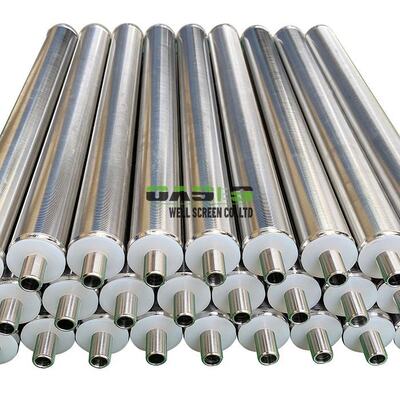
Multiple end fitting options – can be supplied with plain ends, threaded connections, flanges, or welded end rings to integrate seamlessly into your existing filter housing or vessel.
The Wedge Wire Screen Cylinder operates on a principle of surface filtration with self-cleaning dynamics.
Step 1 – Fluid enters from the outside
In a typical reverse-wound configuration, the process fluid flows from the outside of the cylinder toward the inside (outside-in flow). The V-shaped wire profile has its apex (point) facing outward and the wider base facing inward. As the fluid enters the cylinder, it first encounters the wire apexes, then passes through the precisely controlled slots between adjacent wire turns.
Step 2 – Particles are retained on the outer surface
The slot gap (e.g., 0.10 mm, 0.20 mm, or as specified) acts as a physical barrier. Particles larger than the gap are retained on the outer surface of the cylinder, forming a filter cake that actually aids in capturing even finer particles over time. Because the gap is on the inner side of the V-wire, particles do not get wedged or trapped inside the slot – they simply accumulate on the surface where they can be easily removed by backwashing or mechanical scraping.
Step 3 – Clean fluid passes through to the inner bore
Once the fluid passes through the slot, it enters the inner annulus of the cylinder and flows out through the open ends or side connections. The smooth inner surface (created by the wire bases) minimizes turbulence and allows for unobstructed flow to the outlet.
Step 4 – Reverse flow cleans the element
When cleaning is required, flow is reversed (inside-out). The backwash fluid pushes the accumulated filter cake away from the outer surface, and because the slots are self-draining, the particles are easily dislodged and flushed out of the system. This reversible cleaning mechanism – enabled by the reverse-wound design – significantly extends the service interval and reduces downtime compared to conventional depth filters or sintered elements.
The critical advantage – unlike forward-wound screens where particles can become permanently trapped in the converging slots, the reverse-wound Wedge Wire Screen Cylinder allows for complete regeneration, making it a true reusable filter element with a service life measured in years, not months.
Here are the detailed parameters for the Wedge Wire Screen Cylinder – 316L reverse-wound precision filter element:
| Parameter | Specification |
|---|---|
| Product Type | Wedge Wire Screen Cylinder (Reverse-Wound / V-Wire / Continuous Slot) |
| Material | 316L Stainless Steel – wire, support rods, and end fittings (fully matched) |
| Winding Direction | Reverse-wound – apex outward, slot inward (outside-in flow direction) |
| Wire Profile | Triangular / V-shaped profile wire |
| Support Rods | Longitudinal rods, welded to every wire intersection |
| Slot / Gap Size | 0.05 mm to several mm (customizable per application; typical: 0.10, 0.15, 0.20, 0.25, 0.50, 1.00 mm) |
| Slot Tolerance | ±0.02 mm (verified by go/no-go gauges on every cylinder) |
| Cylinder Outer Diameter (OD) | Custom range: 25 mm – 1500 mm |
| Cylinder Length | Customizable: up to 6 meters per section (longer sections can be joined) |
| End Connections | Plain ends, flanged ends, threaded ends, or welded end rings |
Superior filtration precision – with slot tolerances held to ±0.02 mm, the Wedge Wire Screen Cylinder delivers consistent particle retention that sintered or woven mesh simply cannot match. You get reliable, repeatable filtrate quality every cycle.
Self-cleaning design – minimal maintenance – the reverse-wound geometry prevents particles from wedging into the slots. A simple backwash restores the cylinder to near-original flow capacity, dramatically reducing cleaning downtime and replacement frequency.
Long service life – reusable for years – unlike disposable cartridge filters that require frequent replacement, the all-welded 316L Wedge Wire Screen Cylinder is designed for decades of service. Even in abrasive slurry applications, the surface-hardened wire resists wear and maintains slot accuracy.
High flow rates with low pressure drop – the combination of V-wire profile and high open area (up to 60%) means you can process more fluid with less pumping energy. This translates directly into lower operating costs over the life of the filter.
Easy integration – choose from plain ends for welding, flanged ends for bolted connections, or threaded ends for quick installation. We also offer custom end rings to match your existing filter vessel connections.
Q1: What does "reverse-wound" mean, and why is it better?
In a reverse-wound screen, the V-shaped wire is wound with the apex (point) facing outward and the wider base facing inward. This means the slot opening is on the inner surface. When fluid flows from outside to inside, particles are captured on the outer surface and cannot become wedged in the slot. Backwashing pushes them off easily. In a forward-wound screen, the slot narrows toward the outside, which can trap particles permanently – leading to plugging. Reverse-wound is the preferred configuration for applications requiring regular cleaning and long service life.
Q2: What slot sizes are available for the Wedge Wire Screen Cylinder?
We offer slot sizes from 0.05 mm up to several millimeters. Common stock slots include 0.10 mm, 0.15 mm, 0.20 mm, 0.25 mm, 0.50 mm, 0.75 mm, and 1.00 mm. For custom requirements, we can manufacture virtually any gap within our ±0.02 mm tolerance. Please provide your particle retention requirement (e.g., "retain 95% of particles > 150 microns") and we'll recommend the optimal slot.
Q3: Can the Wedge Wire Screen Cylinder be cleaned and reused?
Absolutely. The reverse-wound design is specifically engineered for cleanability. Standard cleaning methods include backwashing (reverse flow), high-pressure water jetting, ultrasonic cleaning, or chemical soaking. Unlike sintered or mesh elements, the wedge wire screen does not trap particles within its structure, so it returns to near-original flow capacity after cleaning. Many of our customers report 5–10 years of service life with regular maintenance.
Q4: What is the maximum operating temperature for 316L?
The 316L stainless steel itself can handle temperatures up to approximately 450°C (840°F) in non-oxidizing environments. However, the practical operating temperature of the complete cylinder assembly may be limited by the seals, gaskets, or end connections in your system. Please consult us with your specific temperature range and we'll confirm suitability.
7. Related Products
![]()
Ready to specify your Wedge Wire Screen Cylinder?
Contact oasis technical sales team with your application details – flow rate, particle retention, pressure, temperature, and fluid properties. We'll engineer a 316L reverse-wound precision filter element that delivers reliable, long-lasting performance in your specific process.
![]()