
Leave a Message
We will call you back soon!
Your message must be between 20-3,000 characters!
Please check your E-mail!
More information facilitates better communication.
Submitted successfully!
We will call you back soon!
Leave a Message
We will call you back soon!
Your message must be between 20-3,000 characters!
Please check your E-mail!
| Place of Origin: | CHINA |
|---|---|
| Brand Name: | OASIS |
| Certification: | ISO9001:2015 ISO14001:2015 |
| Model Number: | OASIS-2025-10-15 |
| Minimum Order Quantity: | 10 Meter/Meters |
| Price: | Negotiation |
| Packaging Details: | Wooden cases or pallet or bundle or container or according to clients' requirements |
| Delivery Time: | Within 35 days |
| Payment Terms: | L/C, T/T |
| Supply Ability: | 6000 Meter/Meters per Month |
| Temperatureresistance: | Up To 800°C (depending On Grade) | Application: | Water Wells, Oil Wells, Groundwater Monitoring |
|---|---|---|---|
| Surfacetreatment: | Polished / Passivated | Applicable Industries: | Energy & Mining |
| Feature: | Corrosion Resistance | Unit Length: | 0-12m |
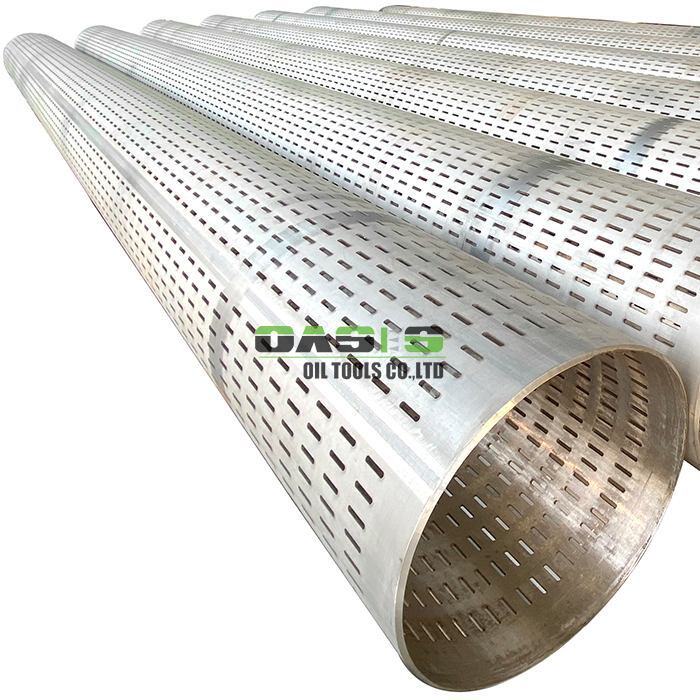
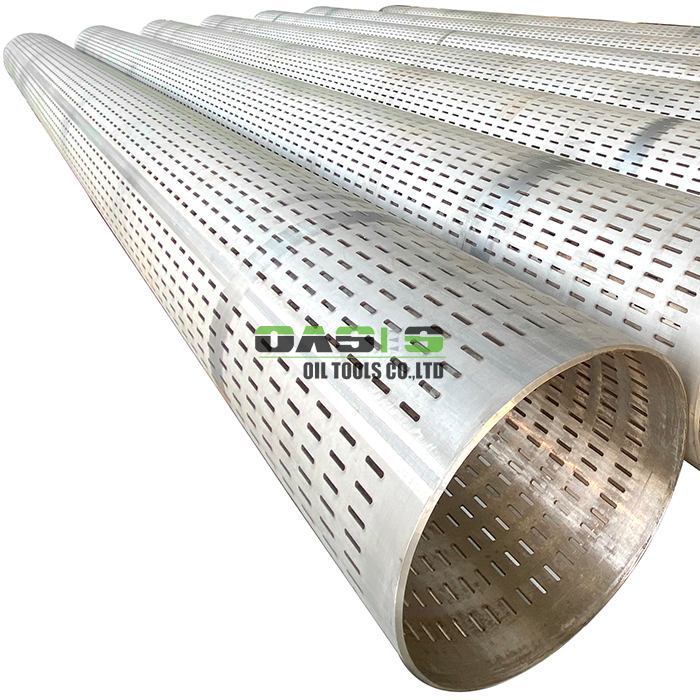
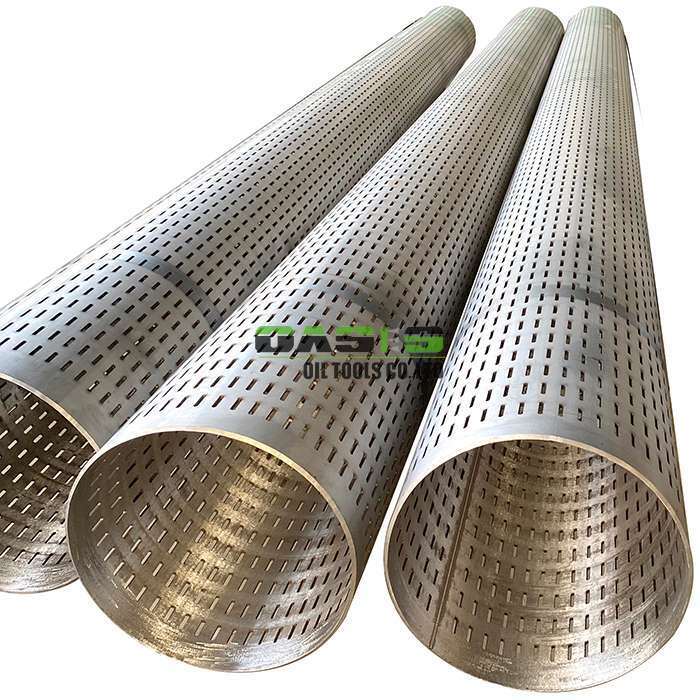
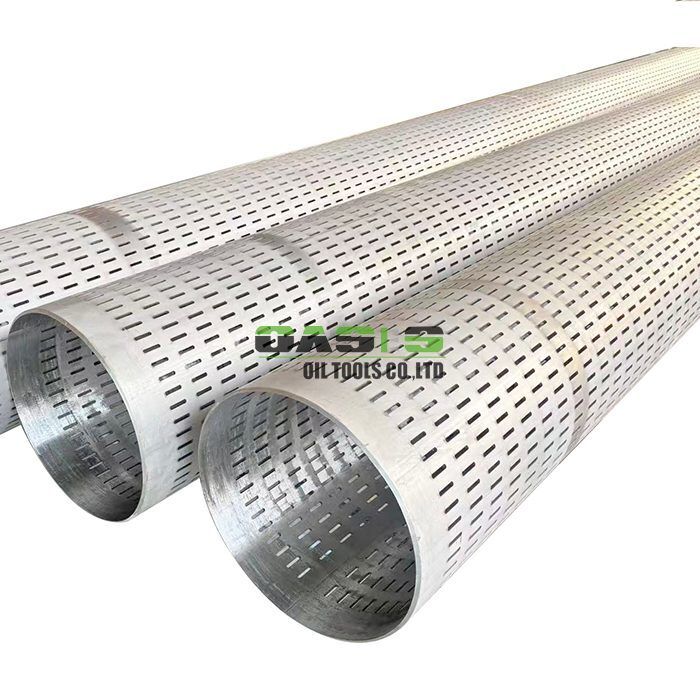
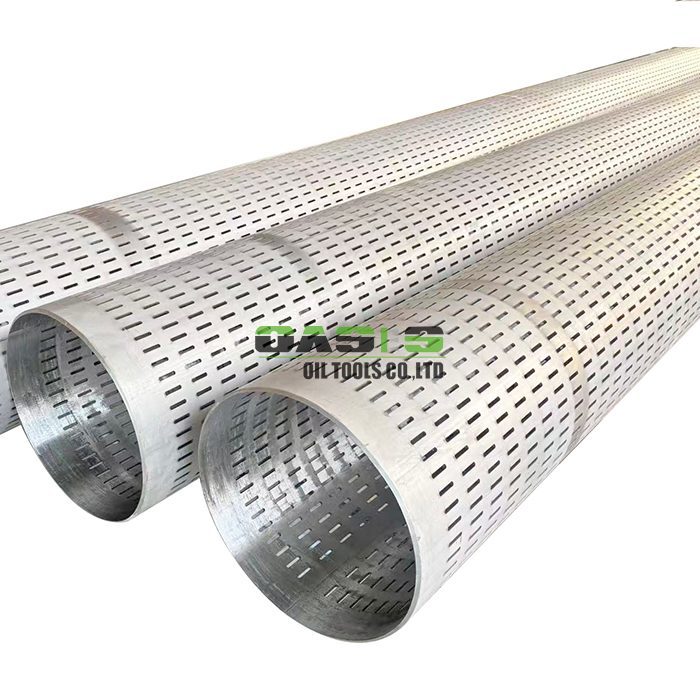
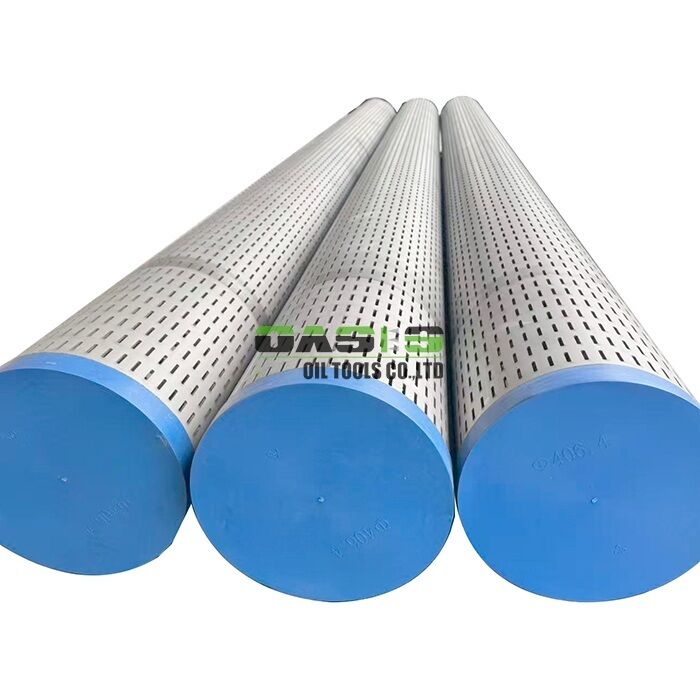
The Slotted Pipe – also referred to as Slotted Casing or Slotted Screen – is a rugged, precision-cut tubular product designed to allow fluid inflow while retaining formation solids in a wide range of downhole and surface filtration applications. Manufactured from high-strength carbon steel or corrosion-resistant stainless steel, this plain-end (no threads, no couplings) version is specifically configured for field welding, making it an ideal choice for operators who prefer a flush, full-bore connection without the risk of thread galling or leak paths.
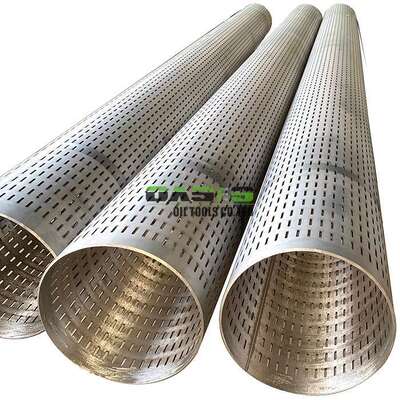
Our slotted pipes are produced by cutting accurately spaced, longitudinal or spiral slots directly into the pipe wall, using advanced laser or plasma cutting technology. The slots are deburred and chamfered to ensure smooth edges that minimize erosion and promote consistent flow. With slot widths starting from 3 mm and slot lengths up to 500 mm, we can tailor the slot pattern – including slot density, arrangement, and orientation – to match your specific formation sand size, production rate, and wellbore geometry.
Whether you're completing a shallow water well, a deep geothermal bore, a high-pressure gas producer, or a dewatering application, our slotted pipe delivers reliable sand control and unrestricted fluid entry – all in a cost-effective, easily weldable package.
![]()
The Slotted Pipe operates on a straightforward mechanical filtration principle: formation fluid flows through the precisely cut slots into the pipe's internal bore, while sand and other solid particles larger than the slot width are retained outside the pipe.
Unlike wire-wrapped screens that rely on a continuous V-wire jacket, the slotted pipe uses the pipe wall itself as the filter medium. The slots are arranged in rows – either staggered or in straight lines – around the circumference and along the length. As fluid enters, the slot geometry creates a pressure drop that is directly related to the slot width, total open area, and flow velocity. By selecting the appropriate slot width (based on sieve analysis of the formation sand), you ensure that most of the sand grains are kept out, while fine particles that do pass are small enough to be produced without damaging downstream equipment.
The plain-end design means that when welded to the adjacent casing joints, the slotted section becomes an integral part of the casing string – there are no threaded connections to leak, no couplings to create turbulence, and no external-upset shoulders to catch tools during run-in.
Over time, a natural filter cake may build up on the outer surface of the slots, which actually enhances filtration efficiency. When flow rates decline, the pipe can be cleaned by backwashing, jetting, or chemical treatment – and the slots, being smooth and deburred, are easy to restore to near-original condition.
Here are the detailed parameters for our plain-end Slotted Pipe:
| Parameter | Specification |
|---|---|
| Product Type | Slotted Pipe / Slotted Casing / Slotted Screen |
| End Connection | Plain ends – no threads, no couplings (designed for butt-welding) |
| Outer Diameter (OD) Options | 2-7/8″ (73 mm), 3-1/2″ (88.9 mm), 4-1/2″ (114.3 mm), 5″ (127 mm), 5-1/2″ (139.7 mm), 6-5/8″ (168.3 mm), 7″ (177.8 mm), 8-5/8″ (219.1 mm), 9-5/8″ (244.5 mm), 13-3/8″ (339.7 mm), 16″ (406.4 mm) – and other custom sizes upon request |
| Material Grades | Carbon steel: J55, K55, N80, L80, P110; Stainless steel: SS304, 304L, 316L (other alloys available on request) |
| Slot Width | Minimum 3.0 mm – up to 50 mm (customizable) |
| Slot Length | Typically 50–500 mm (customizable) |
| Slot Pattern | Straight, staggered, or spiral arrangement; slot density (number of slots per row) customizable |
| Pipe Length | 0–12 meters per joint (longer assemblies can be welded together) |
| Wall Thickness | Standard API or customer-specified (matched to pressure rating) |
| Thread Option | (Although this product is plain-end, we also offer EUE, NUE, BTC, STC, LTC threaded versions – please specify if you require threaded connections) |
Cost-effective sand control – slotted pipes are significantly more economical than wire-wrapped or premium screens, making them the preferred choice for large-diameter water wells, dewatering bores, and low-to-moderate sand production environments.
Plain-end simplicity – no threads means no thread damage during transportation or handling, no need for thread compounds or torque monitoring, and faster installation via simple field welding. The flush bore also minimizes pressure drop and eliminates the risk of coupling leaks.
High flow capacity – with open areas up to 10–15% of the pipe surface (depending on slot size and pattern), slotted pipes provide excellent inflow performance, often outperforming perforated liners of equivalent diameter.
Easy cleaning and maintenance – the smooth, deburred slots allow for efficient backwashing, chemical flushing, or mechanical brushing, extending the service life between workovers.
Our plain-end Slotted Pipe is suited for a broad spectrum of uses:
Shallow water wells – in unconsolidated aquifers, slotted pipe prevents sand from entering the pump while allowing maximum drawdown.
Deep water wells – with heavier wall thickness and corrosion-resistant materials, our slotted casing handles deeper depths and higher hydrostatic pressures.
Oil wells – as a standalone screen in open-hole completions, or as a liner in cased-hole gravel packs, slotted pipe provides reliable sand exclusion at a fraction of the cost of premium screens.
Gas wells – the high open area and erosion-resistant slots make it ideal for high-velocity gas production where fine sand can cause rapid wear on downstream equipment.
Geothermal wells – 316L stainless steel versions resist the corrosive effects of hot brines and high temperatures, ensuring long-term integrity.
Vertical wells – the straight, uniform slot patterns allow for even inflow along the entire screen section, minimizing water coning and gas breakthrough.
Industrial filtration – outside of oilfield, slotted pipes are used in dewatering, mineral processing, and wastewater treatment as durable strainers for large volumes of liquid.
Q1: What is the difference between slotted pipe and wire-wrapped screen?
Slotted pipe uses slots cut directly into the pipe wall, offering a rugged, low-cost option with moderate sand control. Wire-wrapped screens have a continuous V-wire jacket with much finer gaps (down to 0.10 mm) and higher open area, but they are more expensive and delicate. For slot widths ≥3 mm and simple sand retention, slotted pipe is often the most practical choice.
Q2: Why choose plain-end (no threads) over threaded connections?
Plain-end pipe allows for field welding, which creates a flush, leak-proof connection with no coupling shoulders or thread crevices. This reduces turbulence and erosion, eliminates thread compound contamination, and speeds up installation. It is especially beneficial in large-diameter water wells where welding is routine.
Q3: What slot width should I select for my well?
The ideal slot width depends on your formation sand size. A common rule is to select a slot width that will retain 80–90% of the sand grains – typically 0.5 to 2 times the d50 grain size. For example, if your d50 is 2 mm, a 3 mm slot would be reasonable. We recommend sending us a sand sample for a detailed sieve analysis, and our engineers will recommend the optimal slot size.
Q4: Can this slotted pipe be used in horizontal wells?
Yes, provided the pipe is run in a cased-hole horizontal section. The plain-end design allows for continuous welded strings that can be pushed through deviated and horizontal intervals. However, for open-hole horizontal completions, wire-wrapped or premium screens may be preferred due to better collapse resistance. Consult us for a specific recommendation.
Q5: What is the maximum slot length?
We can cut slots up to 500 mm long. For longer slots, we can arrange them end-to-end with a small bridge between them to maintain pipe structural integrity. If you need continuous slots, we can discuss a design with overlapping or helical patterns.
![]()
Contact our technical sales team with your well data – formation sand size, desired OD, grade, slot width, and length – and we'll provide a detailed proposal, drawing, and quote within 24 hours. Whether you need a single joint or a full string, our slotted pipe is engineered to give you reliable sand control at the best possible value.